
Category: Blog, Irrigation Tips
Apr 10
Precision and Preservation: The 2026 Guide to Water-Saving Irrigation in Toronto’s Premier Enclaves
Maintaining a world-class landscape in the Greater Toronto Area has transitioned from a seasonal chore into a sophisticated exercise in resource management. For homeowners in iconic neighborhoods like Rosedale, Forest Hill, and Lawrence Park, the garden is often the most significant investment outside the home itself. As we move through 2026, the challenge of preserving these lush environments is being met with rising municipal water costs and a necessary shift toward environmental accountability.
At Urban Irrigation, we recognize that true luxury in landscaping is now defined by precision. It is no longer acceptable to simply soak a property and hope for the best. The goal is a resilient, vibrant landscape that thrives on exactly what it needs, and not a drop more. This guide explores the advanced water-saving techniques and managerial strategies that are becoming the gold standard for irrigation across the GTA.
The Evolution of the Spring Startup in Toronto
In past decades, the spring startup was a rudimentary task: turn on the water, check for broken heads, and set the timer. In the current landscape, this approach is obsolete. A professional activation in areas like Etobicoke or The Kingsway now serves as a full-scale system audit. This is the moment where efficiency is either captured or lost for the entire season.
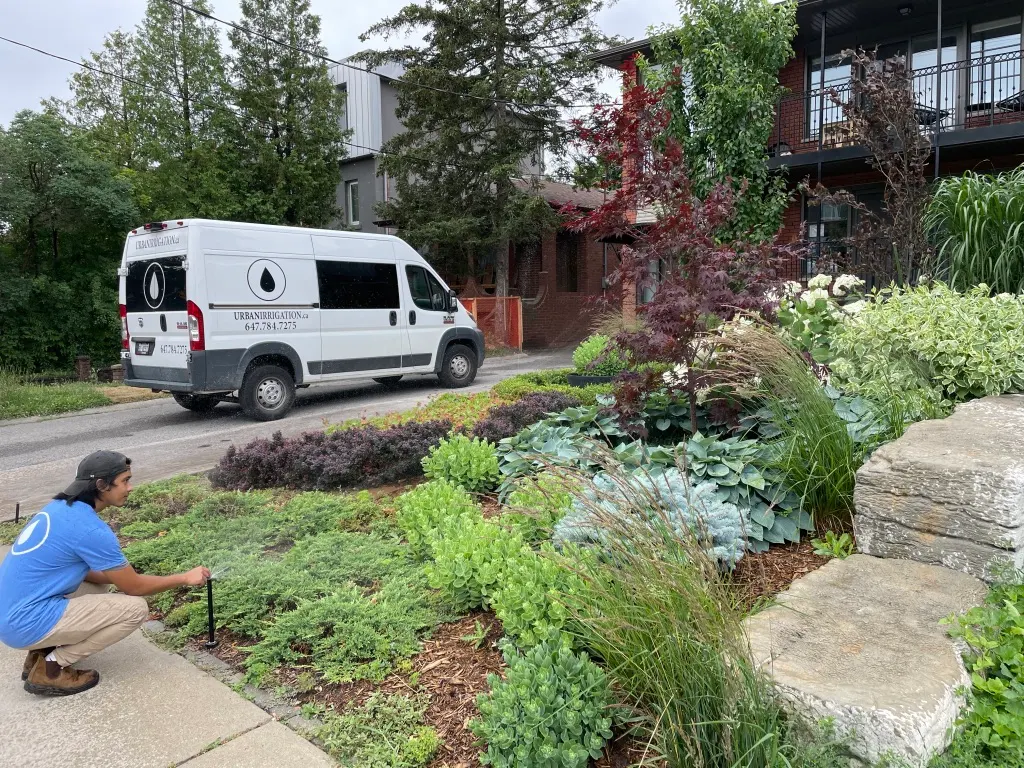
The first step in any modern water-saving strategy begins with pressure regulation. Many older systems in Toronto operate at a pressure far higher than what the spray heads were originally designed for. In lakeside communities within Etobicoke, for instance, the combination of high supply pressure and localized wind gusts often leads to “misting.” This is where water turns into a fine fog that drifts onto the sidewalk or evaporates before it ever touches the soil. By integrating pressure-regulated stems during the startup phase, we ensure that water is delivered in heavy, consistent droplets. This single adjustment can reduce water waste by nearly thirty percent, ensuring your utility bills reflect actual hydration rather than atmospheric loss.
Strategic Zonal Mapping and the Death of the “Dry Zone”
One of the most common frustrations for property owners in Lawrence Park is the presence of stubborn dry patches that seem to defy standard watering schedules. These areas often exist because traditional irrigation systems treat the entire lawn as a single, uniform environment. In reality, a Toronto property is a collection of distinct microclimates. A sun-drenched front lawn has vastly different requirements than a shaded backyard tucked under a canopy of heritage oaks.
Strategic Zonal Mapping is our solution to this imbalance. By utilizing high-sensitivity soil moisture sensors, we decouple the system’s operation from a rigid, arbitrary clock. These sensors act as the digital eyes of the system, measuring the volumetric water content at the root level. If a particular zone in Forest Hill retains moisture longer due to its dense soil composition or protection from decorative stone walls, the system simply bypasses that area. This targeted hydration eliminates the wasteful practice of overwatering the entire property just to satisfy one thirsty corner, preserving both the health of the turf and the long-term integrity of your soil.
Intelligence at the Core: Wi-Fi Controllers and Predictive Data
The “brain” of the modern irrigation system has seen the most significant leap in technology. A static, offline controller is now a liability in a climate as variable as Southern Ontario’s. We have all witnessed the inefficiency of sprinklers running during a Toronto summer thunderstorm. It is a visual representation of wasted resources and outdated management.
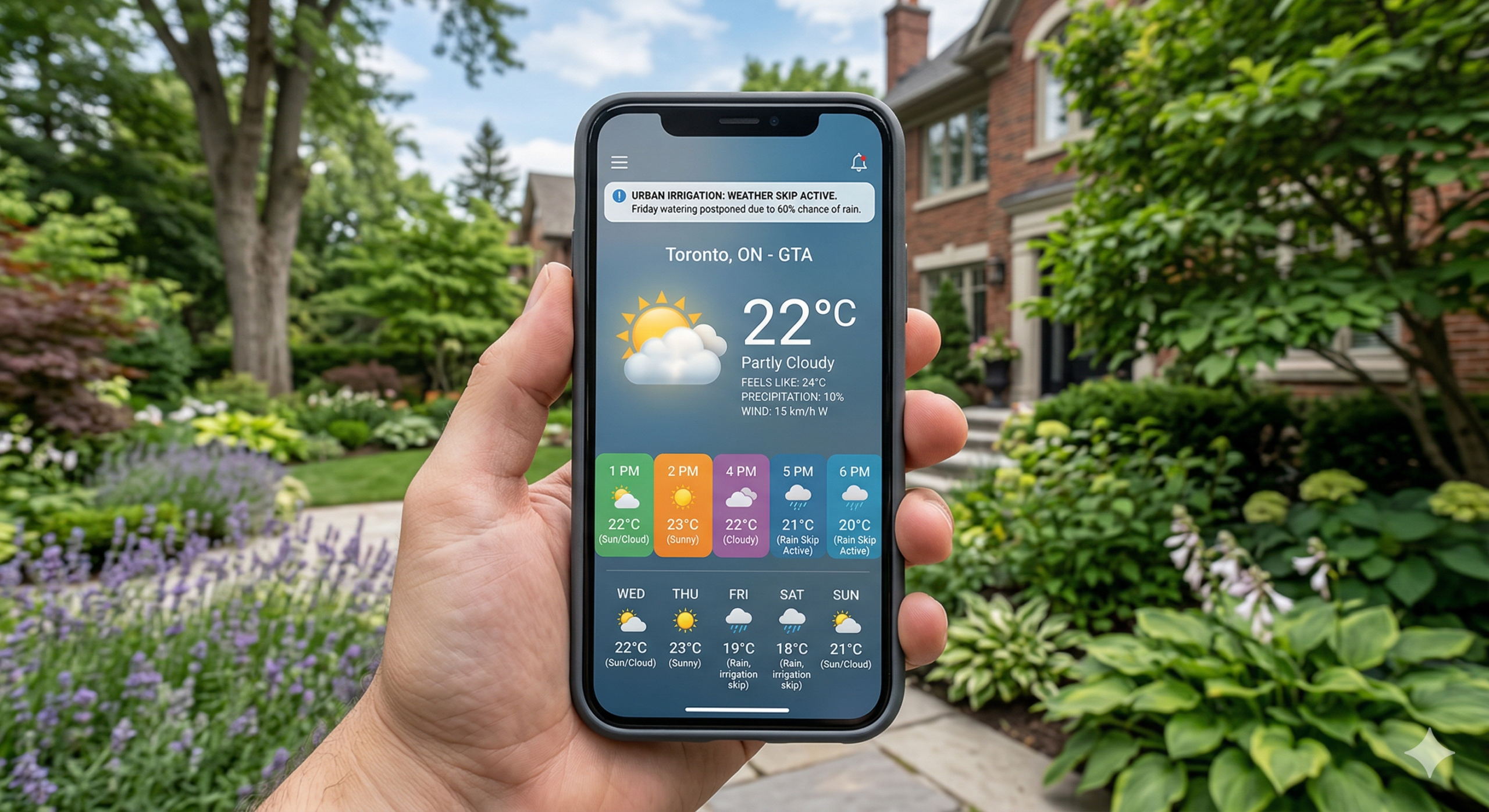
Modern Wi-Fi controllers have turned this around by integrating live weather data from local stations across the GTA. These systems do not just react to rain; they predict it. If the forecast for the Etobicoke shoreline calls for heavy precipitation, the system calculates the evapotranspiration rate—the amount of water lost to the air and the plant—and adjusts the schedule in real-time. This ensures that your landscape remains in a state of optimal health without human intervention, allowing the system to manage its own resources with professional-grade intelligence.
Protecting the Intricate Landscapes of Forest Hill and Rosedale
The architectural beauty of Rosedale and Forest Hill is often complemented by intricate, highly curated garden beds filled with delicate perennials, custom stonework, and expensive shrubbery. Conventional overhead spraying is perhaps the least efficient way to water these specific areas. It promotes weed growth in the gaps between plants and leaves foliage damp, which is a notorious breeding ground for powdery mildew and other fungal diseases common in the humid Toronto summers.
Subsurface Drip Irrigation is the sophisticated alternative for these high-value gardens. By delivering water through a network of specialized tubing buried just beneath the mulch, we provide hydration directly to the root zone. There is zero runoff and zero evaporation. This method is particularly effective for the complex layouts found in Forest Hill because it is entirely invisible, maintaining the aesthetic purity of the landscape while providing the most consistent hydration possible. It protects the investment you have made in your plant material by ensuring water goes exactly where it is needed.
The Professional Advantage: A Managerial Approach to Irrigation
The difference between a standard service and a premium management experience lies in the quality of data and documentation. At Urban Irrigation, we operate under the philosophy that you cannot manage what you do not measure. This is why our technicians provide a comprehensive System Mapping Report following every visit, especially after the initial spring startup.
This report serves as a roadmap for the homeowner or estate manager. It highlights areas of high wear, identifies potential leaks before they cause structural damage to hardscaping, and provides a clear technical argument for upgrades. For example, when we identify a “dry zone” caused by maturing tree roots in Lawrence Park, we do not just suggest more water; we suggest a better delivery method or a timer upgrade. This data-driven approach is what allows our clients to see their irrigation system as an asset that adds value to their property, rather than just another recurring maintenance cost.
A Sustainable Legacy for the Greater Toronto Area
Choosing to implement these water-saving techniques is a clear statement of intent. It shows a commitment to the long-term health of our local environment and a profound respect for Toronto’s shared infrastructure. As our city grows and our climate continues to shift, the properties that thrive will be those that have embraced modern efficiency.
Whether you are looking to modernize a historic estate in Rosedale or optimize a contemporary home in Etobicoke, the path forward is clear. Precision, technology, and proactive management are the pillars of the modern Canadian landscape. By investing in these areas today, you ensure that your property remains a lush, green sanctuary for decades to come, reflecting the high standards of the communities we serve.
Ready to Optimize Your Property for 2026?
Don’t let another season go by with an inefficient system. Whether you are in Rosedale, Forest Hill, or Etobicoke, Urban Irrigation is ready to bring precision and beauty to your landscape.
Reach us directly at: info@urbanirrigation.ca
Recent Comments